Key Takeaways
- Google is rolling out five updates to AI Mode and AI Overviews that make source attribution more visible and informative.
- New features like inline citations, hover previews, and enhanced publisher attribution are designed to encourage more users to visit external websites.
- The updates address long-standing concerns from publishers about declining referral traffic from AI-generated search experiences.
- As AI search evolves, creating authoritative, citation-worthy content is essential for maintaining organic visibility.
- Marketers should continue monitoring traffic patterns and adapt their SEO strategies as Google’s AI experiences mature.
AI search and AI Link Attribution is changing how people find information, and how publishers reach them. Google’s AI Overviews and AI Mode now deliver direct answers inside the search results page, which has raised a real question: if users never need to click, what happens to your traffic?
Google’s latest update is a direct response to that concern. The company announced five improvements to how AI Mode and AI Overviews credit sources, making citations more visible and giving users more paths to explore beyond the AI-generated answer.
Here’s what changed and what it means for your SEO strategy.
What Changed in Google’s AI Link Attribution?
Google’s latest update goes beyond adding more links. The focus is on making AI link attribution more useful.
Previously, one of the biggest criticisms of AI Overviews was that source attribution often felt secondary. Users could receive an answer without clearly understanding where the information came from or why a particular website had been cited.
The latest changes make attribution much more visible throughout the AI experience.
Each update is worth a closer look.
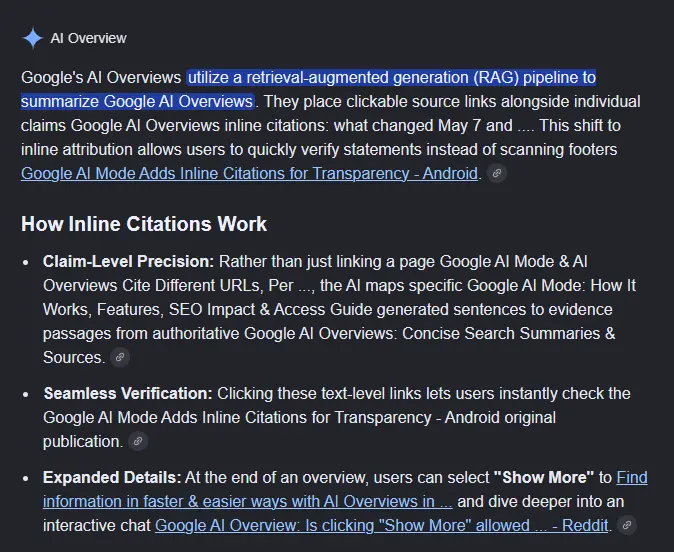
Inline Citations Appear Next to AI-Generated Text
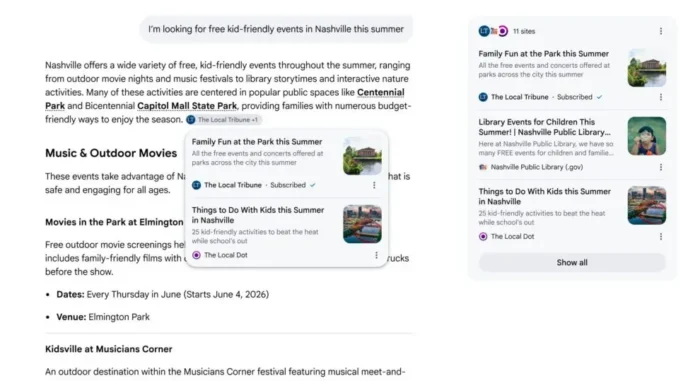
One of the most noticeable changes is the placement of citations directly alongside the content they support. Instead of grouping sources at the end of an AI-generated response, Google now places links next to the relevant text, making it easier for users to identify where specific information originated.
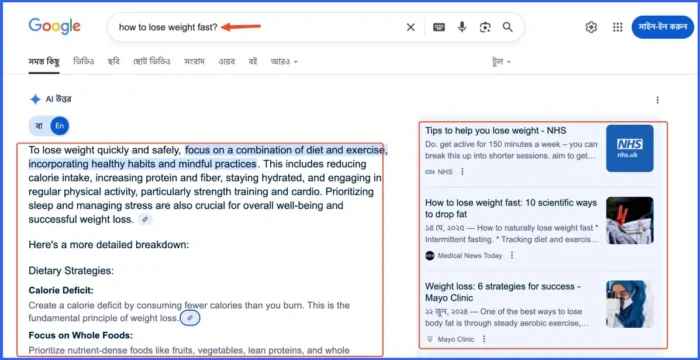
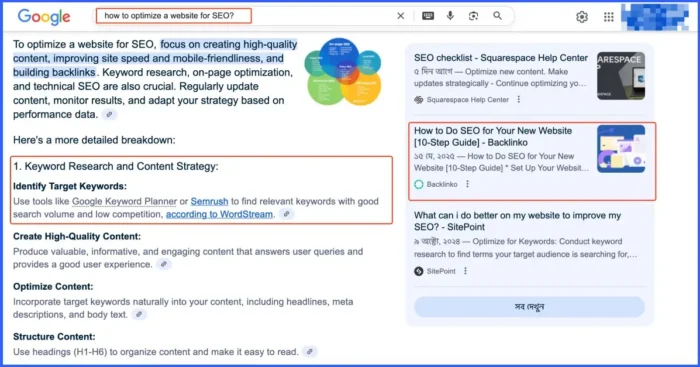
Hover Previews Give Users More Context
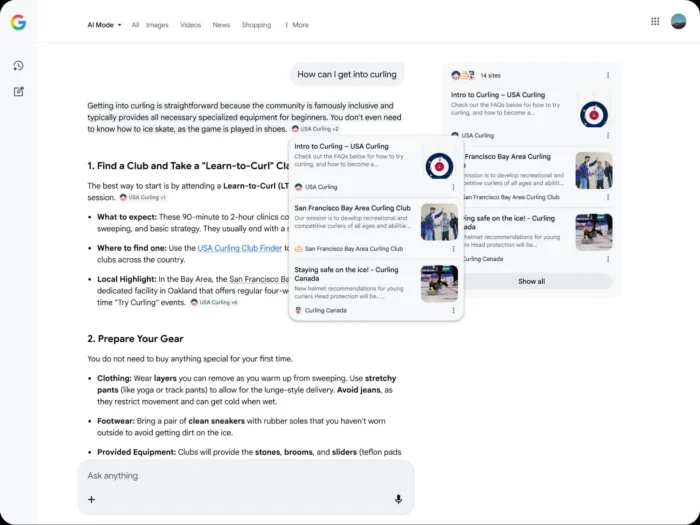
On desktop, users can now hover over many citations to preview information about the linked webpage before clicking. These previews provide additional context about the source, helping users decide whether they want to explore the website further.
Better Attribution for News Publishers
Google is also giving news publishers greater visibility by displaying clearer publisher branding and, in some cases, subscription information alongside AI-generated responses. Providing more context about where reporting originated helps users identify and access the original source.
More Descriptive Social Media Citations
Google is also improving how it references social content.
AI Mode now provides richer attribution for social media content by displaying creator names or profile handles alongside links, giving users enough context to recognize who created the content before they click.
Suggested Research Angles Encourage Deeper Exploration
The final update may have the biggest long-term impact.
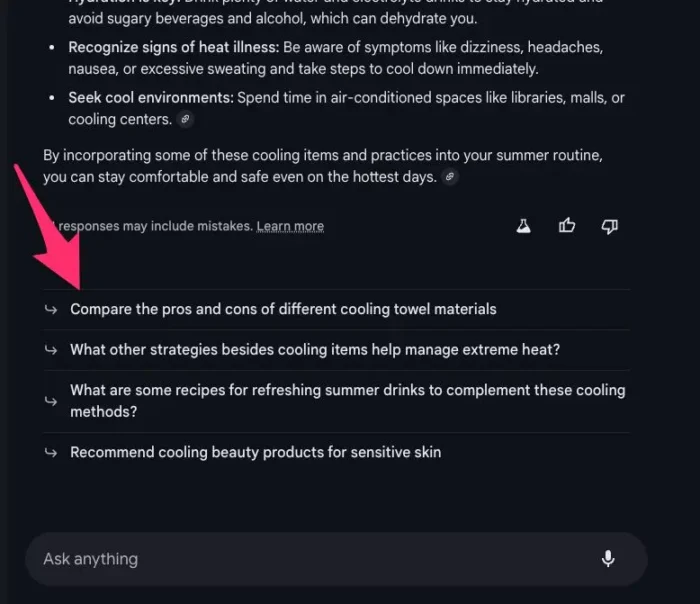
Rather than ending with a single AI-generated answer, Google now suggests additional questions and related topics users may want to explore. These prompts push users to keep researching instead of treating the AI response as the final word.
Why Google Is Improving AI Attribution
Since AI Overviews launched, one concern has dominated conversations among publishers and SEO professionals: will AI answers reduce website traffic? It’s a reasonable one. If users receive complete answers directly in search results, fewer people may feel the need to visit the websites that originally produced the information.
Google has consistently argued that AI search should help users discover high-quality content, not replace it. These latest attribution updates reinforce that message.
Citations now sit closer to the relevant text, and hover previews add context before a click. Publisher identities are easier to spot too. Together, these changes make it easier and more appealing for users to continue their journey beyond Google’s interface.
These updates are a positive step. They show Google listening to publisher feedback and working to balance the user experience with the health of the open web as generative search matures.
Whether these improvements lead to higher click-through rates remains to be seen, though they demonstrate that Google recognizes the importance of supporting the broader web ecosystem as AI search evolves.
What These Updates Mean for SEO
Google’s attribution updates don’t change the fundamentals of SEO, but they do reinforce what Google values as AI-powered search continues to evolve. Rather than introducing a new ranking system, these changes make it easier for users to discover and engage with the sources behind AI-generated answers. For marketers, that means authoritative, user-focused content is still the clearest path to visibility.
AI Visibility Creates New Opportunities
As AI Overviews and AI Mode become a larger part of the search experience, earning a citation within an AI-generated response becomes another opportunity to reach potential visitors. Google’s latest updates make those citations more prominent, giving brands another way to stand out beyond traditional organic rankings.
Authority Drives AI Citations
AI-generated answers rely on trustworthy sources. That raises the value of original research and firsthand expertise. Content that demonstrates real knowledge and offers something users can’t find elsewhere is more likely to earn both traditional rankings and AI citations.
Richer Attribution Improves Click-Through Rates
Google’s new attribution features are designed to help users better understand where information comes from before they click. Richer source information and hover previews create a more transparent search experience that could encourage users to visit the original content instead of stopping at the AI-generated summary.
How to Optimize Your Content for AI Attribution
Google’s latest attribution updates don’t require a completely new SEO strategy. Instead, they reinforce what has always contributed to search visibility: content that’s original, built on real expertise, and useful to the people reading it. As AI search continues to evolve, these qualities remain the foundation of search visibility.
Publish Original Insights
Google’s AI systems need reliable information to reference. Original research, proprietary data, or genuine firsthand experience gives your content value that AI-generated answers can’t easily replicate.
Strengthen Your EEAT Signals
Experience, Expertise, Authoritativeness, and Trustworthiness (EEAT) remain key indicators of content quality. Clear author credentials and reputable sourcing help establish credibility, and regularly updated content reinforces it further for both users and Google’s AI systems.
Create Citation-Worthy Content
Well-organized content is easier to understand and easier to cite. Use descriptive headings, answer questions directly, and support key points with statistics or concise explanations that can stand on their own.
Monitor AI Search Performance
As Google continues refining AI Overviews and AI Mode, keep a close eye on your analytics. Monitoring changes in impressions, click-through rates, and referral traffic can help you understand how new AI features affect your organic visibility and where your strategy may need to adapt.
AI Search Is Becoming a Gateway Instead of a Destination
One of the biggest concerns surrounding AI search has been that users might get all the information they need without ever leaving Google’s results page.
These attribution updates suggest Google is moving in a different direction.
By making citations more visible and giving users richer context around sources, Google is positioning AI search as a gateway to high-quality content rather than a replacement for it.
For marketers and publishers, that’s an encouraging signal. While AI search will continue to evolve, success will still depend on creating original, trustworthy content that’s valuable enough for users and Google’s AI systems to reference.
FAQs
What are Google’s AI link attribution updates?
Google introduced five enhancements to AI Overviews and AI Mode that improve how sources are displayed, covering inline citations, hover previews, publisher attribution, social media context, and suggested follow-up topics. Together, they’re designed to make it easier for users to find and visit the content behind AI-generated answers.
Why is Google improving AI attribution?
The updates appear to address concerns from publishers and content creators about declining referral traffic from AI search experiences. By making sources more visible and informative, Google aims to create a better balance between providing instant answers and driving users to the original content.
How can I optimize my content for AI citations?
Focus on publishing original, authoritative content that demonstrates expertise and provides unique value. Strengthening your EEAT signals, organizing information clearly, and supporting claims with credible sources can improve your chances of being referenced by Google’s AI systems.
Will AI Overviews replace traditional SEO?
No. Traditional SEO remains essential, but AI search introduces another layer of visibility. Rather than replacing organic rankings, AI Overviews create additional opportunities for authoritative content to reach users through AI-generated responses.
Conclusion
Google’s latest AI link attribution updates may seem like small interface improvements, but they represent a meaningful shift in how AI-powered search connects users with the broader web.
By making citations more prominent and adding richer context around publishers and creators, Google is acknowledging that high-quality content remains the foundation of its search experience, even in the era of generative AI.
For marketers, the takeaway is clear. The best way to earn visibility in AI search isn’t to chase every new feature. It’s to continue producing original, authoritative content that users and Google’s AI systems can trust.
As these experiences continue to evolve, keep a close eye on your analytics and be prepared to adapt your strategy. The fundamentals of SEO haven’t changed, but the ways users discover your content certainly have.
If you want to stay ahead of Google’s latest search developments, explore our resources on AI SEO and content strategy, or reach out to the NP Digital team to learn how emerging search experiences can fit into your long-term marketing strategy.