If you’re worried about what AI Overviews mean for SEO, let me remind you of the panic over featured snippets circa 2017. Remember how that turned out? At first, bloggers and SEOs bristled over these quick-glance summaries at the top of the Google SERPs, fearing they’d steal all our traffic. Eventually, however, we adapted and started optimizing content to get mentioned in them. I believe the same will be true of AI Overviews. I mean, it’s already happening: The internet is now filled with the latest advice on how to get cited in AI Overviews (including this article).

I wrote this guide for SEO and marketing leaders seeking practical frameworks to overcome declining clicks and optimize content for Google AI Overviews. Find out what triggers an AI Overview, how AIOs will change SEO playbooks, and where AI Overview optimization fits inside an existing SEO program. I’ll include lots of research and examples, too.
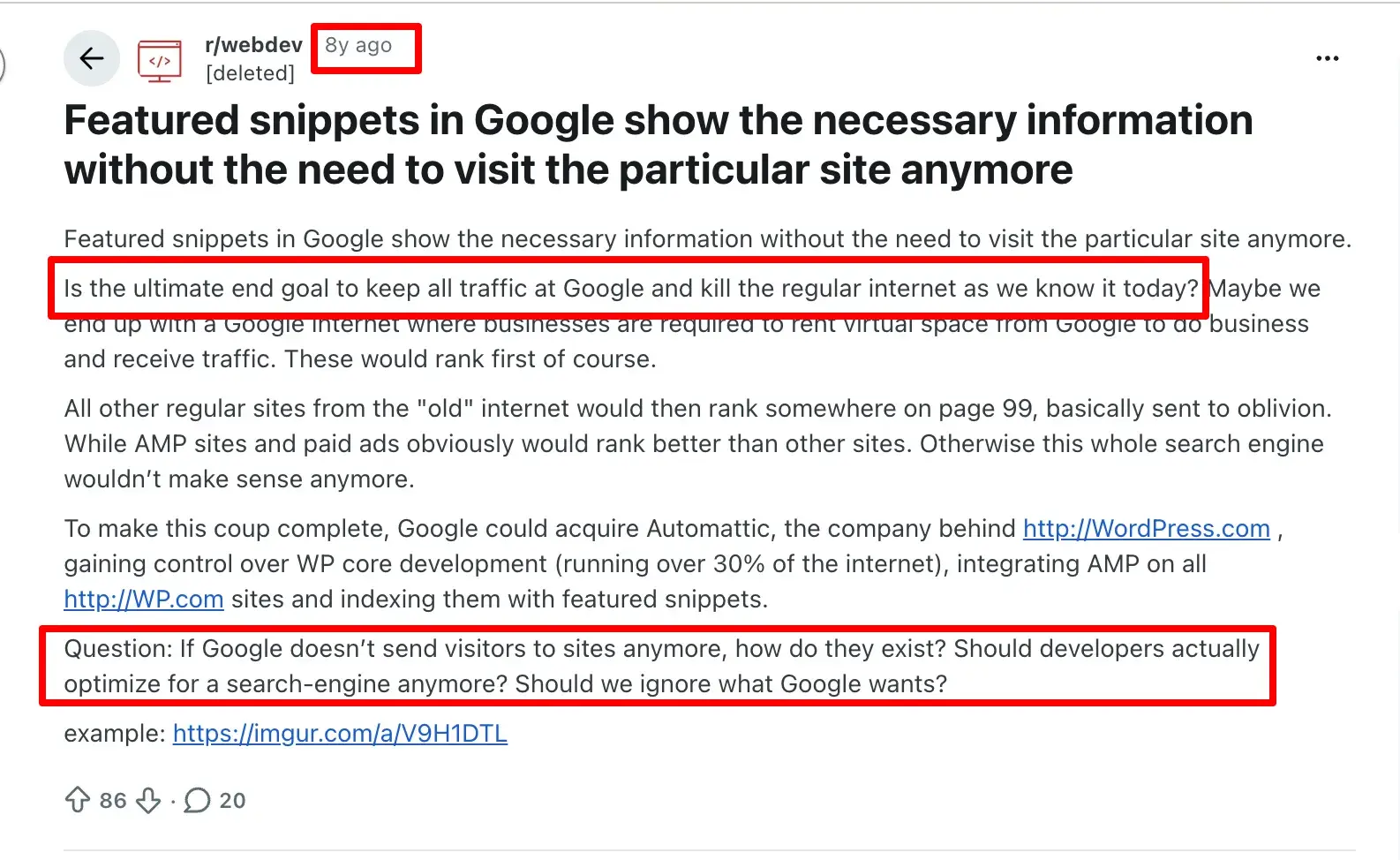
A 2018 Reddit post about how featured snippets could “kill the regular internet”
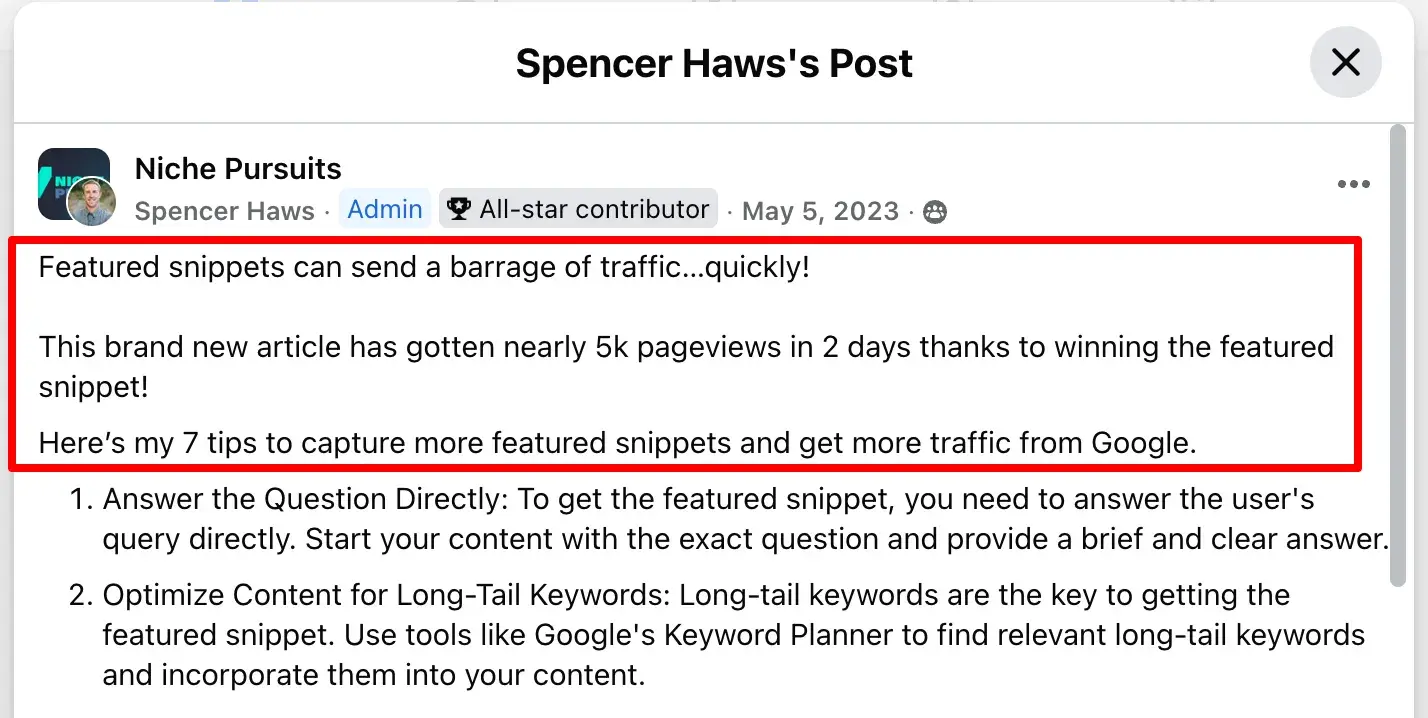
A 2023 Facebook post from a blogger praising featured snippets and sharing how to capture them
Table of Contents
- What are AI overviews?
- What Triggers an AI Overview
- How to Get Cited in Google AI Overviews
- What AI Overviews Mean for SEO
- Measuring and Diagnosing AI Overview Impact
- Frequently Asked Questions About AI Overviews and SEO
- Beyond AI Overviews: Tracking Your Visibility Across All Answer Engines
What are AI overviews?
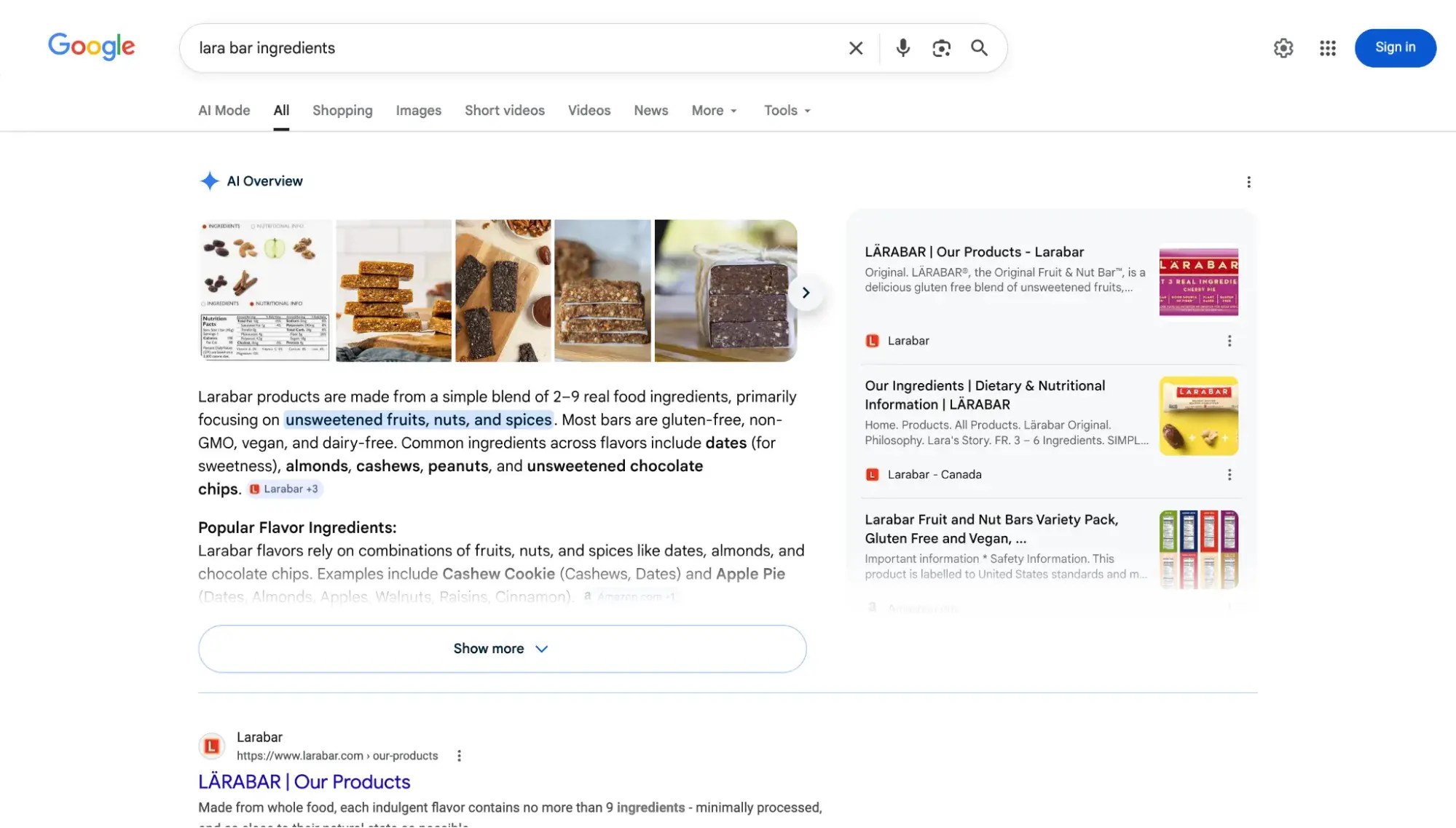
AI Overviews are AI-generated summaries that appear at the top of the Google search results page, giving a direct answer to your query, synthesized from multiple websites. There may be a few images, links, and a “show more” button you can click to get more details. You can also click the cited sources to read those webpages.
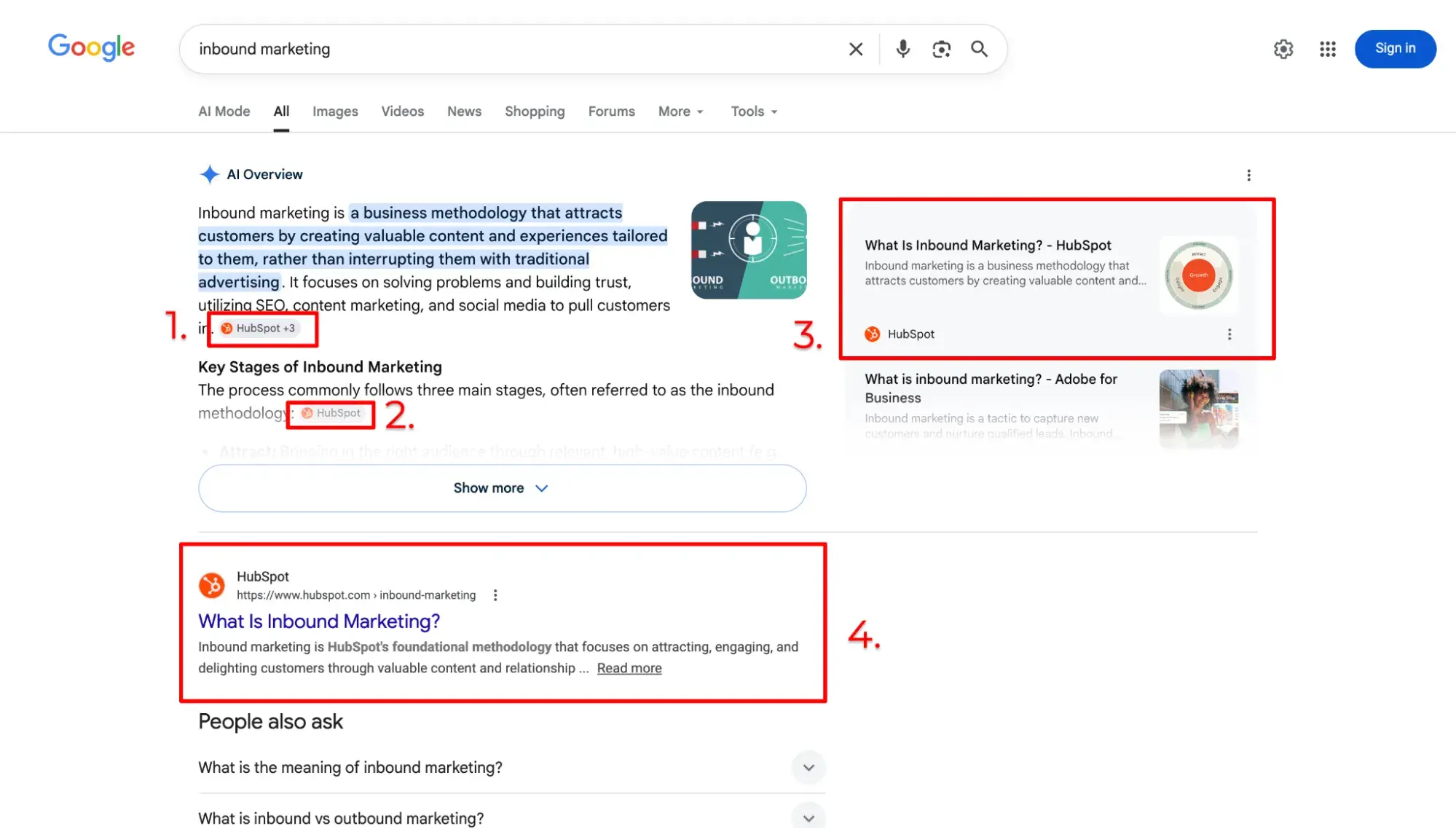
Here’s an example of an AI Overview that the HubSpot Blog shows up in. Notice that HubSpot is featured four times above the fold: as two in-line citations within the AI Overview’s summary, as a clickable snippet to the right of the summary, and as the first blue link in the traditional search results below. Winning the AIO and first position means a brand can multiply the surface area it occupies in Google’s new SERP design.
AI Mode, on the other hand, is the full AI chatbot experience of Google Search. You can access it by clicking the “AI Mode” tab at the top of Google. Unlike the one-shot nature of AI Overview, AI Mode allows you to continue the conversation in multiple turns, similar to ChatGPT or Claude. The rest of this article will focus specifically on AI Overviews.
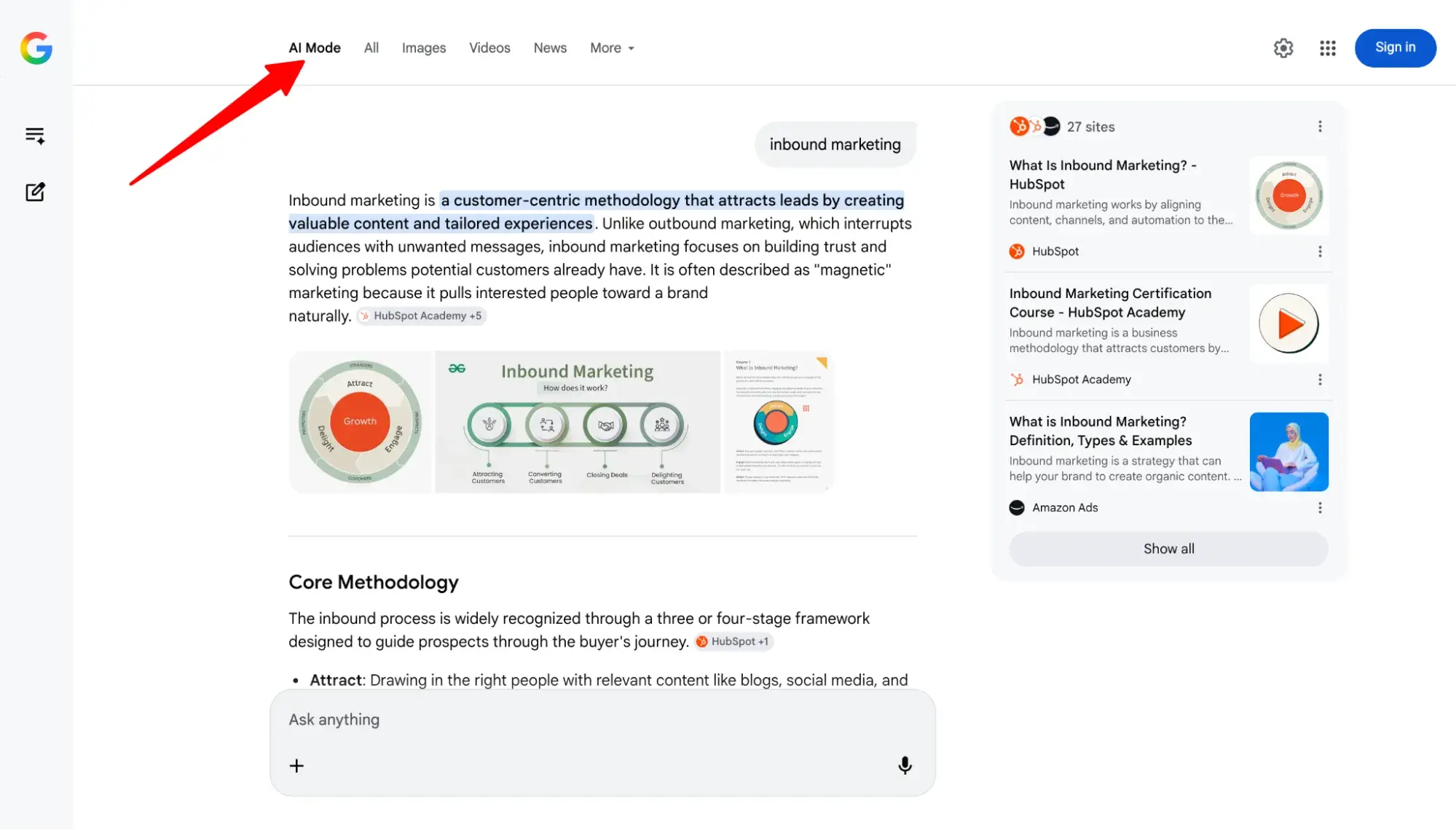
Importantly, the links that show up as sources in an AI Overview do not always overlap with the top 10 results on the SERP. That means your webpage can rank number one in Google and still get overlooked for an AI Overview. In fact, a Semrush study of 200,000 AI Overviews found that the number one search result appeared in the AIO only 34% of the time on mobile and 46% of the time on desktop.
Because AI overviews seek to instantly and directly answer the query, searchers often do not need to scroll or click further to get their answer. Their query is immediately satisfied. As you can imagine, this can have a devastating effect on click-through rates (CTR) and website traffic.
What AI Overviews Mean for SEO
AI Overviews correlate with lower click-through rates and higher zero-click searches, meaning you can expect to see less organic traffic from Google. On queries where AI Overviews appear, average outbound organic clicks dropped 38% and zero-click searches rose from 54% to 72%, according to a working paper published in April 2026 by researchers from the Indian School of Business and Carnegie Mellon University.
And AI Overviews are increasingly the norm: As of February 2026, they triggered on nearly half (48%) of tracked queries, according to BrightEdge. And when broken down by industry, that rate could be even higher: AI Overviews triggered on 84% of 1,000 B2B queries analyzed by AEO agency Fan Out.
From our own data, HubSpot customer organic traffic was down 27% year-over-year globally as of February 2026 (though I don’t know how much of that, if any, was due to Google AI Overviews). But what I’m saying is this: If you’re seeing consistent declines in traffic, you’re definitely not alone.
So, what do AI Overviews mean for SEO?
- Success metrics have to shift. With the rise of zero-click searches, clicks are a poor measure of success. Now, it’s about influencing buyers even when they never click through to your site. Instead of obsessing over keyword optimization, positions, and traffic, focus on brand visibility score, mentions, and citations.
- Traditional SEO still matters. AI Overviews are heavily influenced by the SEO fundamentals you already know: technical SEO, quality content, and topical authority. After all, Google has explained that “AI Overviews use a customized Gemini model, which works in tandem with our existing Search systems.” Ranking well in Google’s SERP will help you win AI Overviews (though it’s not guaranteed).
- Adding AEO is essential. Answer engine optimization (AEO) is separate from but complementary to SEO. Some AEO tactics have no SEO equivalent. For example, SEO has historically optimized for ranking on specific keywords, while AEO emphasizes topical breadth across the conversational, fan-out queries that answer engines generate behind the scenes. And while SEO is primarily focused on driving traffic to your site, AEO leans heavily on off-site presence — building entity signals through authentic mentions on platforms like Reddit, YouTube, and industry publications — so your brand surfaces in AI answers even when no one clicks through.
What Triggers an AI Overview
Not every query will trigger an AI Overview in Google Search. Here’s what we know triggers an AI Overview, based on large-scale studies from Ahrefs and Semrush.
1. Informational Intent Keywords
The majority of AI Overviews come from informational intent keywords (from top-of-funnel users who just want to learn), but over the past year, AIOs have been moving down the funnel, according to the latest Semrush data. Semrush’s analysis of 10M+ keywords found that the share of informational queries triggering AI Overviews dropped from 91.3% in January 2025 to 57.1% by October 2025. Over the course of 13 months:
- Commercial queries grew from 8.15% to 18.57%. These indicate mid- to bottom-of-funnel users evaluating a potential purchase.
- Transactional queries grew from 1.98% to 13.94%. These indicate bottom-of-funnel users looking to make a purchase immediately.
- Navigational queries skyrocketed from 0.84% to 10.33%. These are typically from users who are Googling a name to reach a website.
Informational pages are still the most likely AIO targets, but the gap is closing fast. Don’t assume your comparison, pricing, or branded pages are safe from AIO disruption because, increasingly, they aren’t.
2. Questions, Especially Those Starting With “What,” “How,” and “Is”
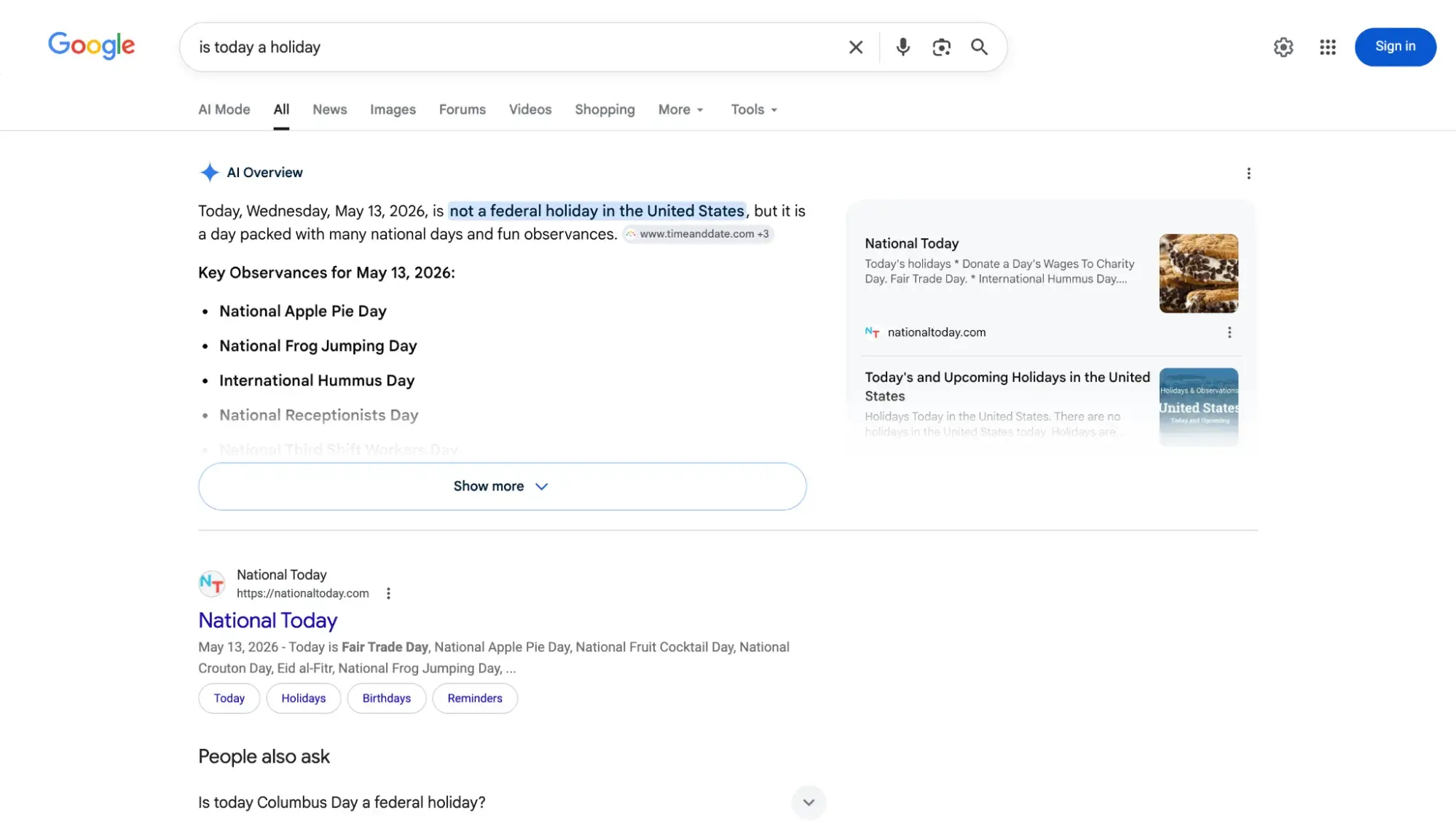
Ahrefs found that 57.9% of all question queries triggered an AIO. Further, Semrush found that among the question keywords that triggered AI Overviews in its sample, those starting with “what,” “how,” and “is” appeared most frequently.
3. Queries about Science and People & Society
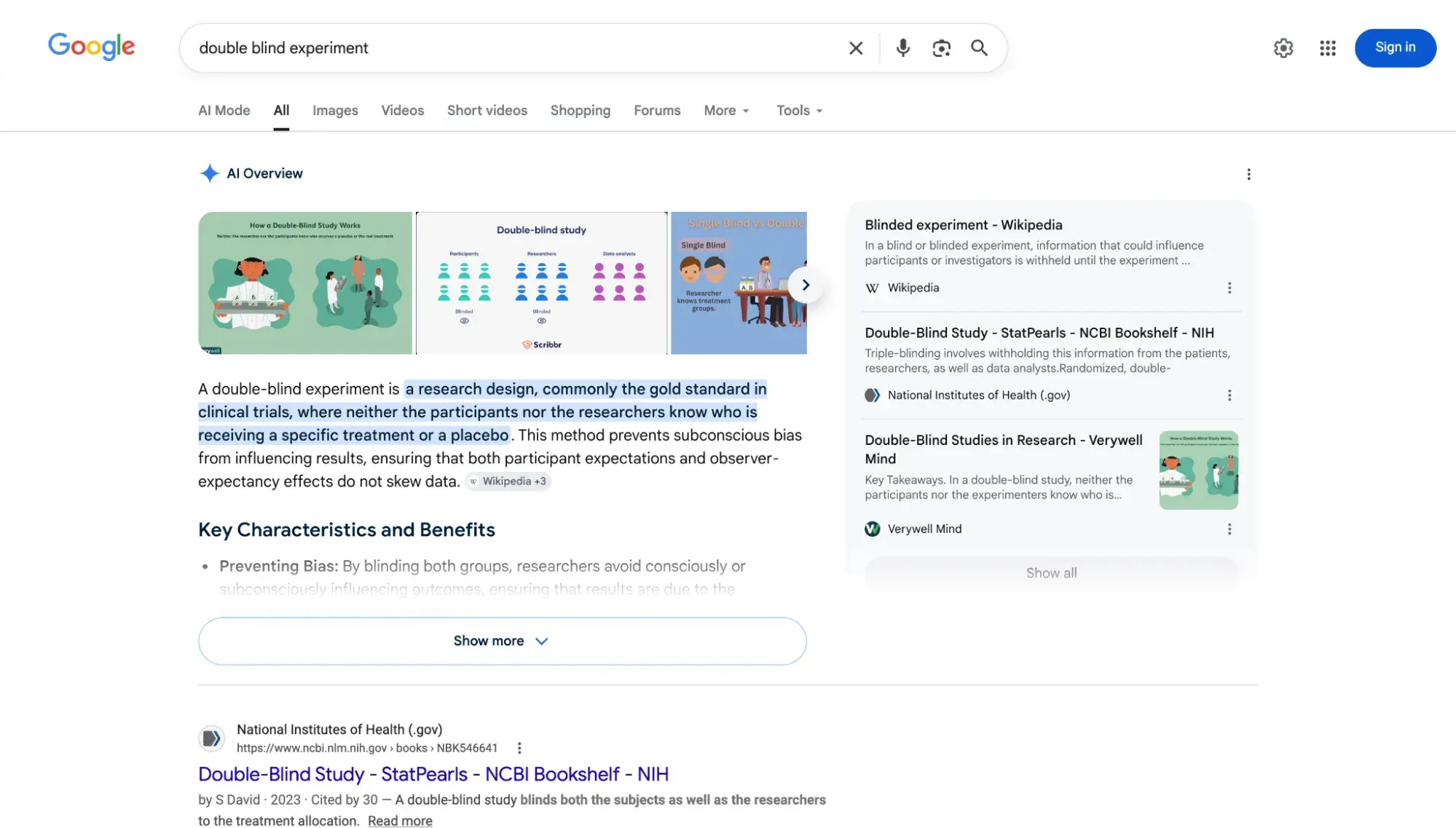
Science and People & Society are consistently among the industries most likely to trigger an AI Overview, per both Ahrefs and Semrush. Ahrefs found that 43.6% of Science queries and 43.0% of Health queries triggered an AIO — more than double the 21% baseline across all keywords. Semrush’s analysis of November 2025 data placed Science, Computers & Electronics, and People & Society among its top-cited industries.
4. Long Queries (7+ words)
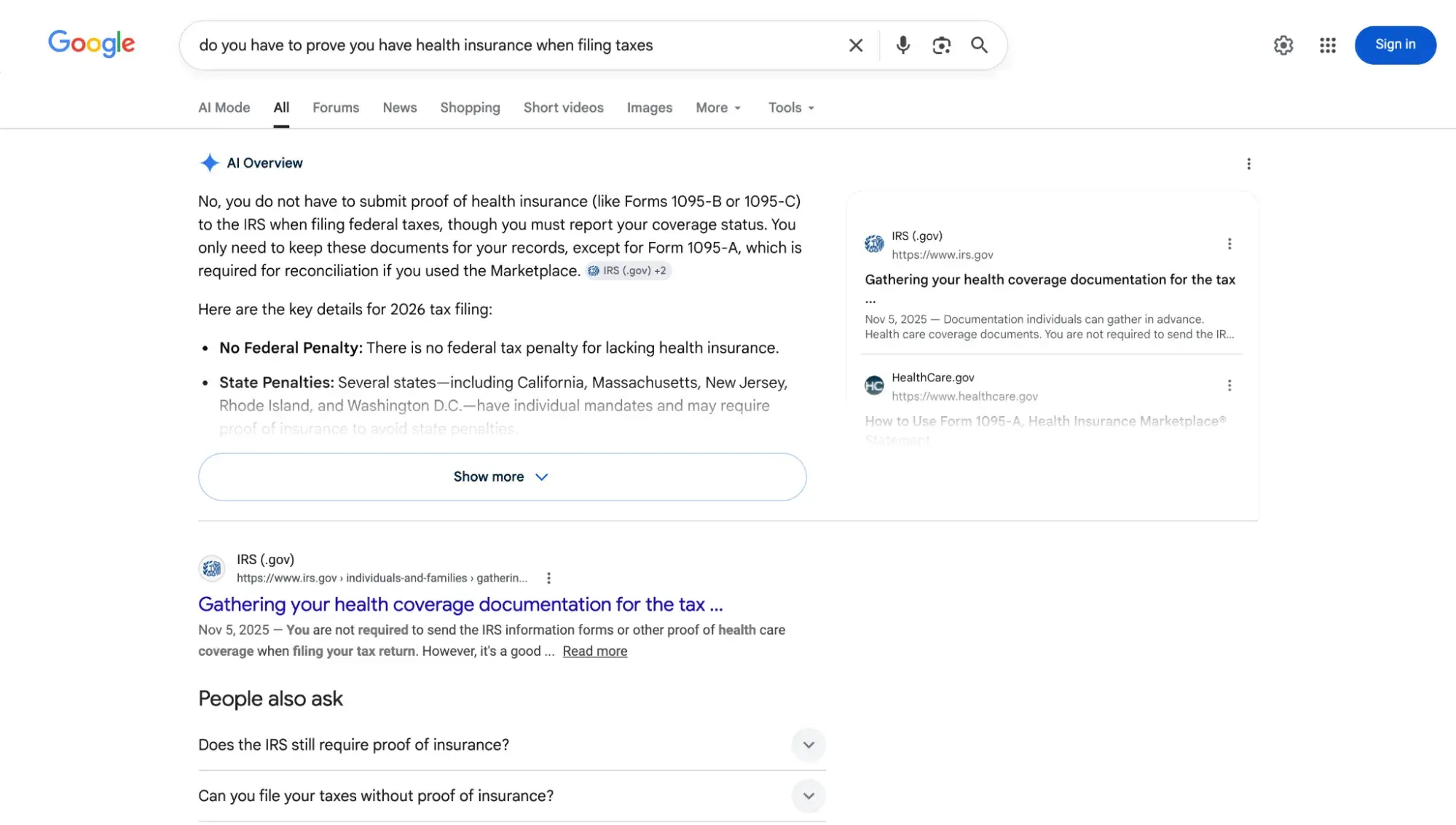
The longer a query, the more likely it is that an AI Overview will appear. Forty-six percent of queries that are seven or more words trigger an AI Overview, according to Ahrefs data. The research also found that the chances of an AIO appearing increase incrementally as query length increases, starting at 9.5% for one word and maxing out at 46.4% at 7+ words.
5. Non-Branded Queries
Ahrefs found that non-branded queries are 1.9x more likely to trigger an AIO than branded queries (24.9% versus 13.1%). Here’s an example: When I enter the non-branded query of “calorie tracking app,” I get this AIO:
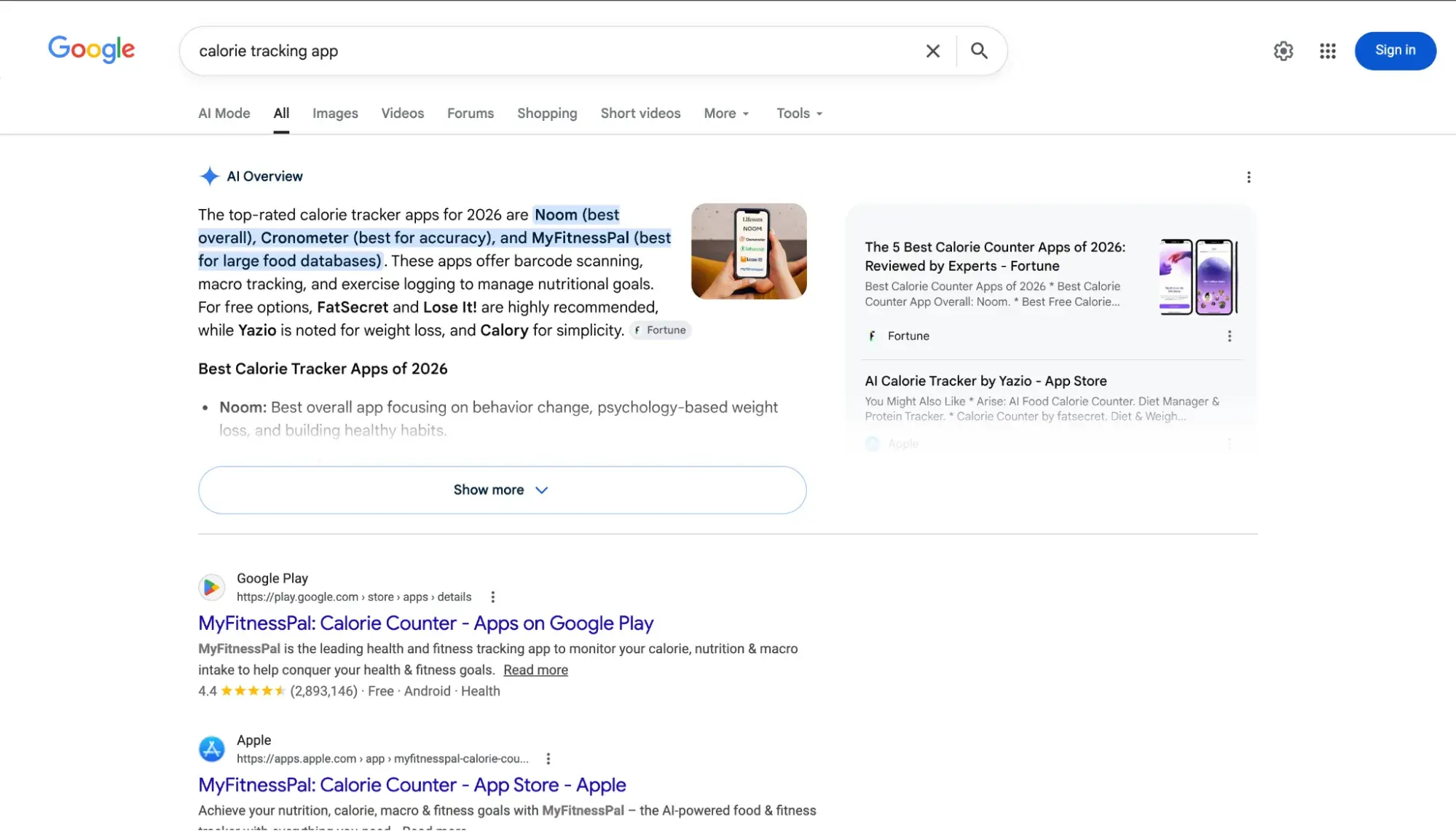
But when I enter the branded query of “MacroFactor,” I don’t get an AIO at all. Instead, I get MacroFactor’s website.
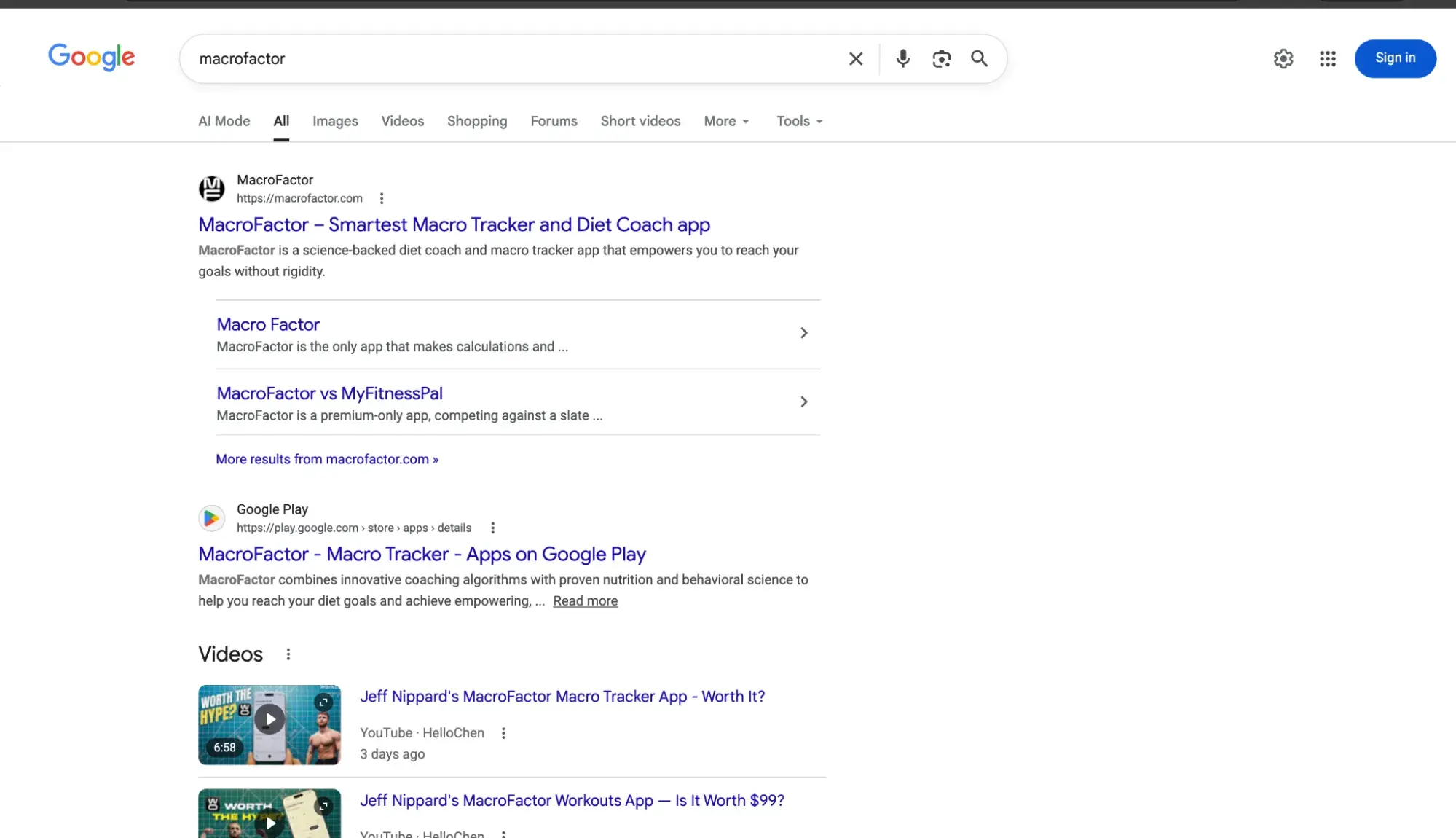
This makes sense when you think about intent (which we talked about earlier): Someone typing in “MacroFactor” probably has navigational intent — they’re trying to get to that specific brand’s website. But someone typing in “calorie tracking app” likely has informational or maybe even commercial intent — they’re trying to get more information about an app and/or they’re considering buying.
Overall, if an AI Overview appears for a query, users are far less likely to click any links. That means the goal now is to get cited in the AI Overview to win the visibility and traffic you can. The next section will show you how to do just that.
How to Get Cited in Google AI Overviews
Let’s start with the bare minimum, without which you won’t be able to show up in AI Overviews or Google Search at all:
- Your site can’t be blocking GoogleBot, Google’s crawler.
- Your content shouldn’t be in violation of any of Google’s policies.
- The page should load (return an HTTP 200 success code as opposed to, for example, a 404 error).
Google insists that, beyond those listed above, there are no further technical requirements to be eligible for an AI Overview. However, what the search giant does not explicitly share is how to optimize for AI Overviews (i.e., increase your chances of getting chosen for an AIO).
For that, we’ll need to turn to industry experiments and best practices for AI search content. Most of the evidence below is based on actual analysis of thousands of AI citation data points reported in HubSpot’s State of AEO 2026. I’ll also cite more of the research from the report I mentioned earlier from AEO agency Fan Out.
1. Focus on publishing blog content.
Across eight content types, blog posts/informative articles are the most-cited for AI Overviews, with a 42% citation rate, according to HubSpot’s State of AEO 2026. The least cited content types in AI Overviews are news (non-evergreen articles) at 5% and PR at 6%.
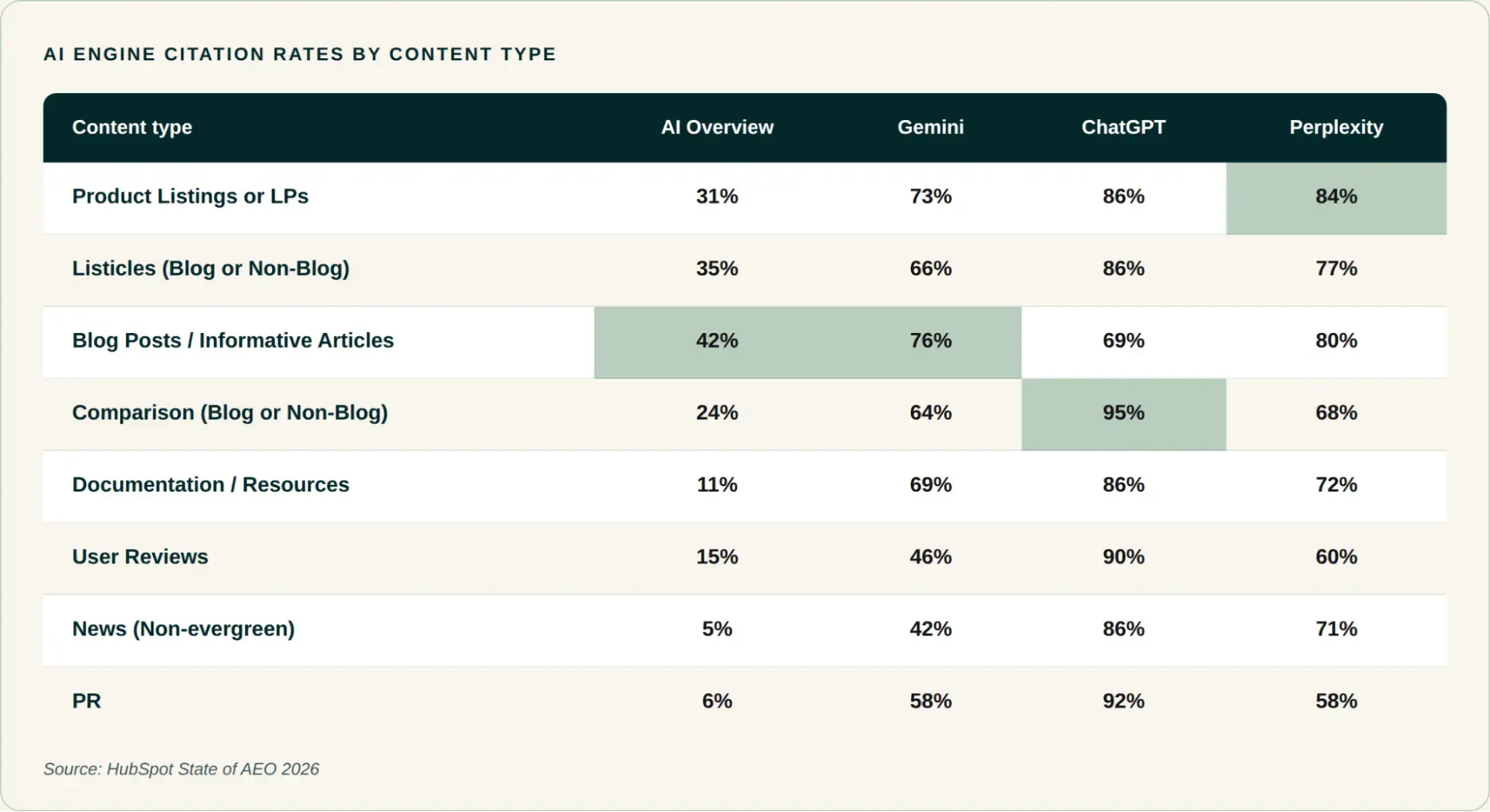
This makes sense based on the other content types analyzed in the report and what we already know about what triggers AI Overviews: 57.1% of queries that trigger AIOs are informational, and compared to other content types — like comparisons, which lean toward commercial intent and are favored by ChatGPT — blog posts are highly informational. So, if you’re specifically trying to win AIOs, blog posts should be your focus.
2. Optimize your titles.
Across eight title patterns, “What is [X]” is the top performer for AI Overviews, while “Best [X]” lists and How-tos work well too. Including the year in H1s and meta titles also correlates with higher citation rates in AIOs.
![HubSpot State of AEO 2026 matrix of best title patterns for answer engines, with “What is [X]” marked as the top performer for AI Overviews](https://53.fs1.hubspotusercontent-na1.net/hubfs/53/what-ai-overviews-mean-for-seo-13-20260514-4203247.webp)
Ideal title for AI Overview: “What is the best website builder for beginners in 2026?”
Not ideal title for AI Overview: “The complete guide to website builders for beginners”
3. Add FAQ sections to your pages.
Pages with FAQ sections are more likely to be cited in AI Overviews, according to the State of AEO 2026. Adding schema markup (a type of structured data you add as code snippets) to those FAQ sections correlates with higher citations in Google AI Mode, Gemini, and Perplexity. Now, having said that, let me be clear: AI Overviews do not require schema markup.
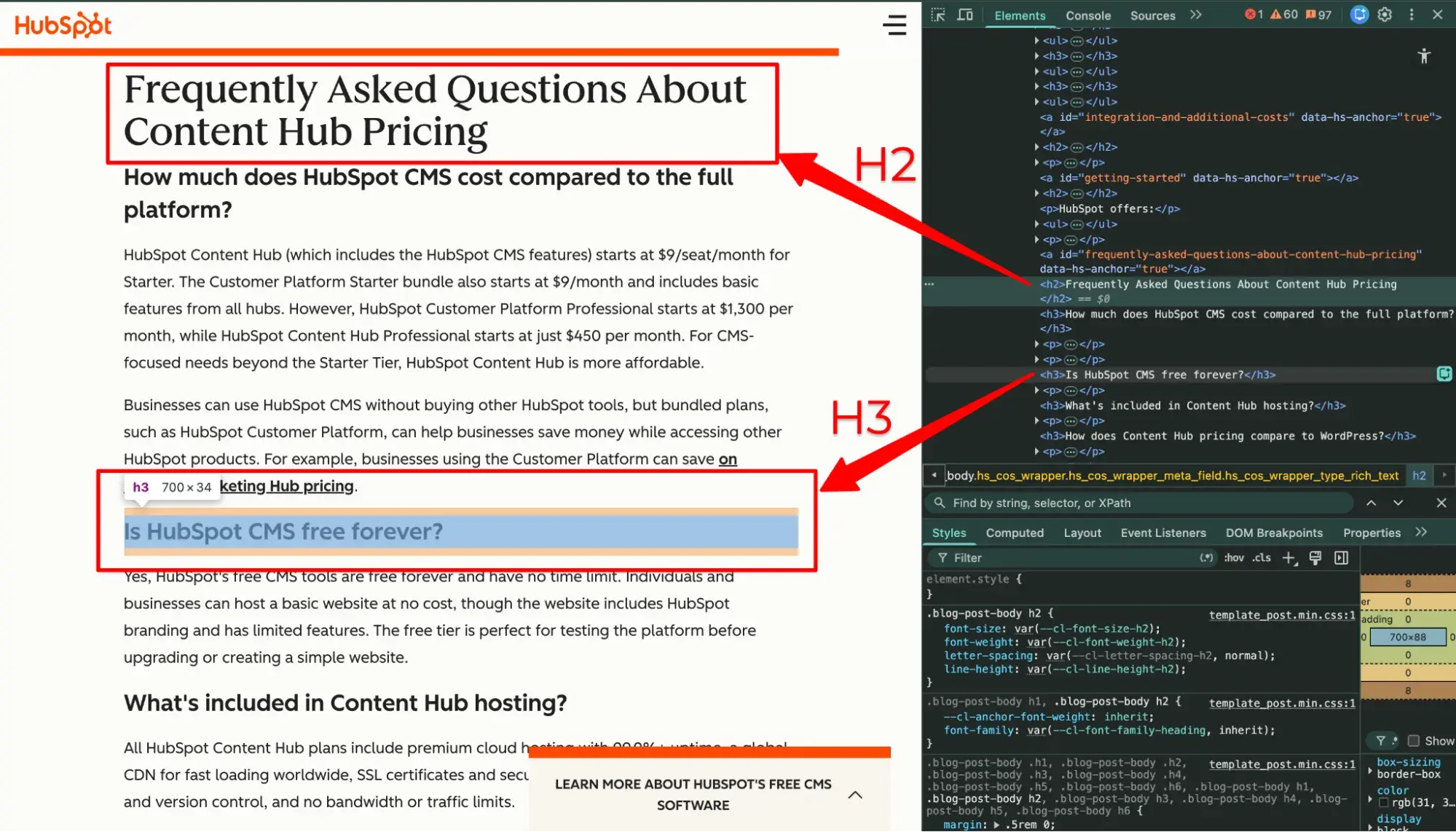
Below is what a good FAQ section looks like, courtesy of HubSpot’s Content Hub pricing guide. Notice the descriptive H2 heading (“Frequently Asked Questions About Content Hub Pricing”) and the questions formatted as H3s — the State of AEO report found that this combination could provide a citation boost.
4. Build EEAT signals in each page.
AI Overview is among the most responsive to EEAT signals compared to any of the other answer engines the State of AEO report analyzed. It makes sense, given that the EEAT framework came from Google.
Specifically, the State of AEO found the following page elements are tied to an increase in AI citations (so adding these to your content might help you get cited in more AIOs):
- Outbound links (especially true for AIOs and Gemini)
- Statistics and data (especially true for AIOs and ChatGPT)
- Author bio on page (slightly higher citation impact than the author name alone)
- A visible “Last updated” date (a stronger citation predictor than the original publish date)
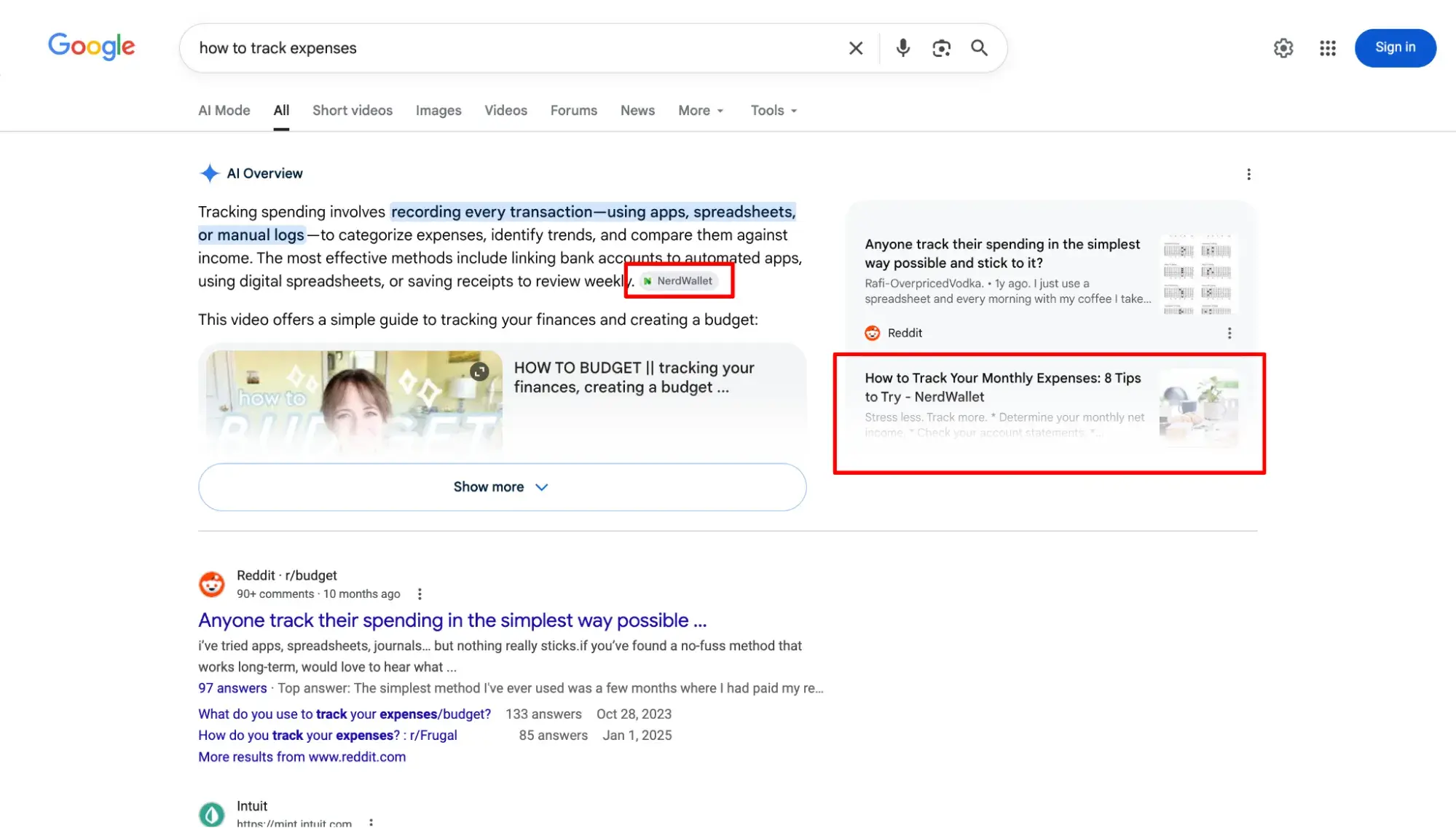
Let’s dissect an excellent example of building EEAT signals into a page from NerdWallet, a company that State of AEO’s analysis identified as one of the most cited B2C brands in its dataset. NerdWallet wins the AIO for the highly competitive query “how to track expenses,” showing up not once, but twice.
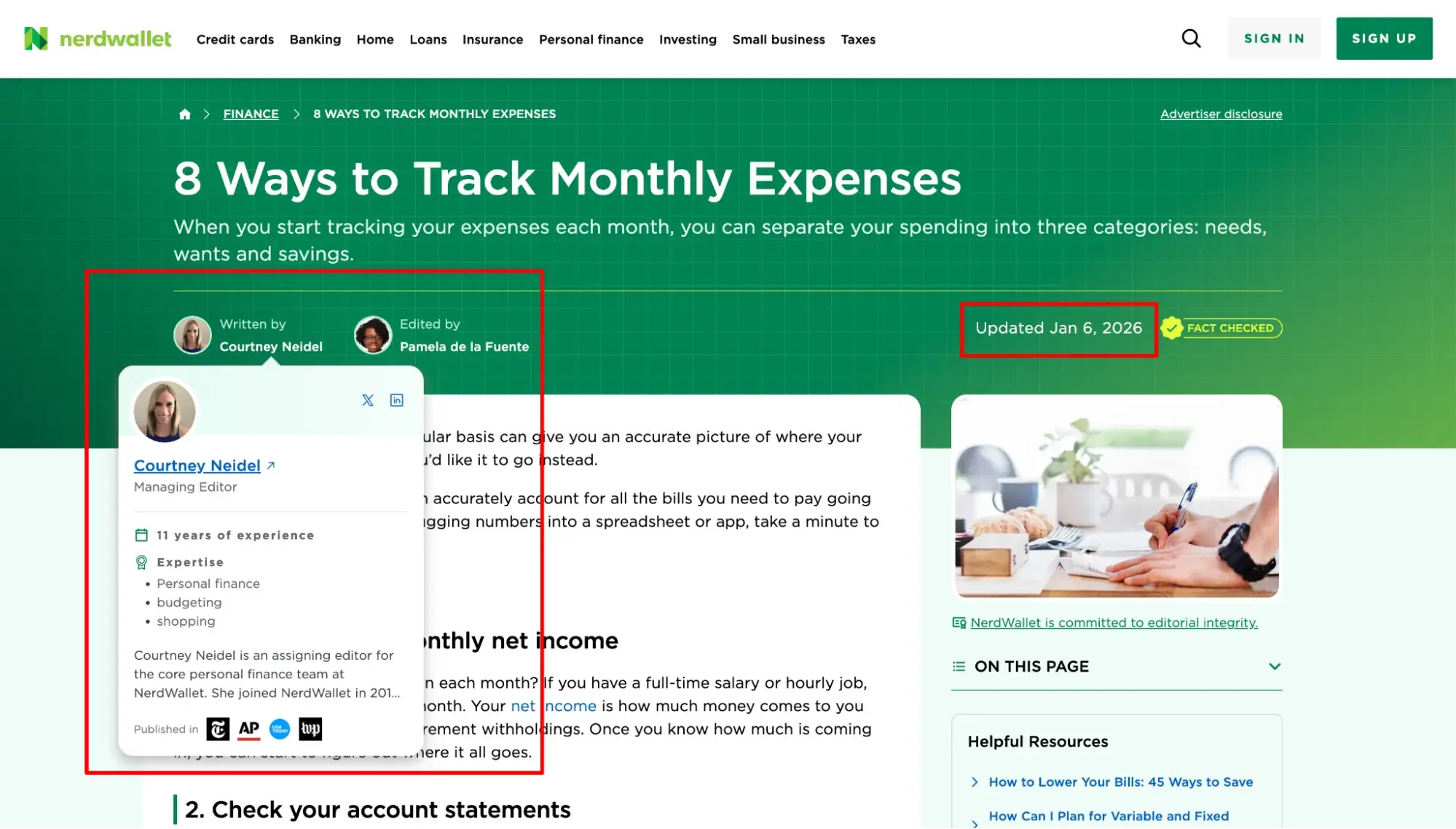
Now, let’s click through to the blog post and see how NerdWallet nails EEAT signals on-page. First, there’s an author byline which, upon hover, triggers a pop-up with the author bio (the author bio is also available at the bottom of the article). Within that bio, there’s a wealth of credibility signals: the author’s years of experience, areas of expertise, and even the publications she’s been published in. On top of that, the page clearly displays when the post was last updated.
5. Apply traditional SEO principles too.
And last but certainly not least is our old friend, SEO. No, it hasn’t gone anywhere. In fact, a strong SEO foundation is essential to building a successful AEO program — and SEO expert predictions point to that same overlap between traditional ranking and AI visibility.
I spoke with Elie Berreby, head of SEO and AI search at Adorama, which was named “Top Overachiever” in consumer electronics AI brand visibility by Similarweb in 2026. This means Adorama “ranks significantly higher in AI visibility than in branded search demand,” according to Similarweb’s report. Berreby reiterated the interdependence of traditional search and AI Overviews. “If you are not optimizing for Googlebot, obviously, you are ignoring the entire Google ecosystem, and you’re going to suffer in Gemini, in AI Mode, and in the AI Overviews.”
According to the State of AEO report:
- From the dataset, HubSpot found that pages that rank high in Google are more likely to be cited in an AI Overview than other answer engines.
- Pages that rank for more Google search terms and rank highly in SERPs are more likely to be cited by answer engines in general.
- With an ideal keyword range of 50+, AIO was tied with Perplexity for the highest preferred number of keywords of any of the AI answer engines in the dataset (including Gemini, AI Mode, Copilot, ChatGPT, and SearchGPT).
Takeaway: If you want a page to win an AI Overview, cover more subtopics and answer more subquestions in that one piece than you would have before.
Pro tip: To write a comprehensive piece that’s AIO-worthy, AEO strategist Kaleigh Moore recommends owning the topic by thinking holistically about the questions your buyers might ask. “How do we think about topical ownership for our specific customer trying to solve this very specific problem?” Moore says. “What are the types of questions they’re asking at this stage of the buyer’s journey? And how do we create content that proactively answers those questions?”
6. Create content for and get mentioned on Reddit and YouTube.
For off-site strategy, YouTube is the first place marketers interested in appearing in more AI Overviews should invest. Sixty-one percent of YouTube citations in Fan Out’s analysis came from AIOs. And given that Google owns YouTube, I’m not at all surprised that AIO prefers this platform most. To put that favoritism in perspective, of the 1,000 queries in Fan Out’s dataset, ChatGPT Plus cited no YouTube links at all.
Here’s some of what Fan Out’s report reveals and recommends for optimizing YouTube for AEO:
- Comparisons and tutorials dominate, so create content in these categories. Specifically, Fan Out names problem-solution, comparison, and best-of as the top three YouTube video types.
- 13.7% of the YouTube citations had timestamps, so Fan Out recommends adding chapter markers and timestamps to your videos.
- Optimize your video descriptions to help LLMs understand what your video is about.
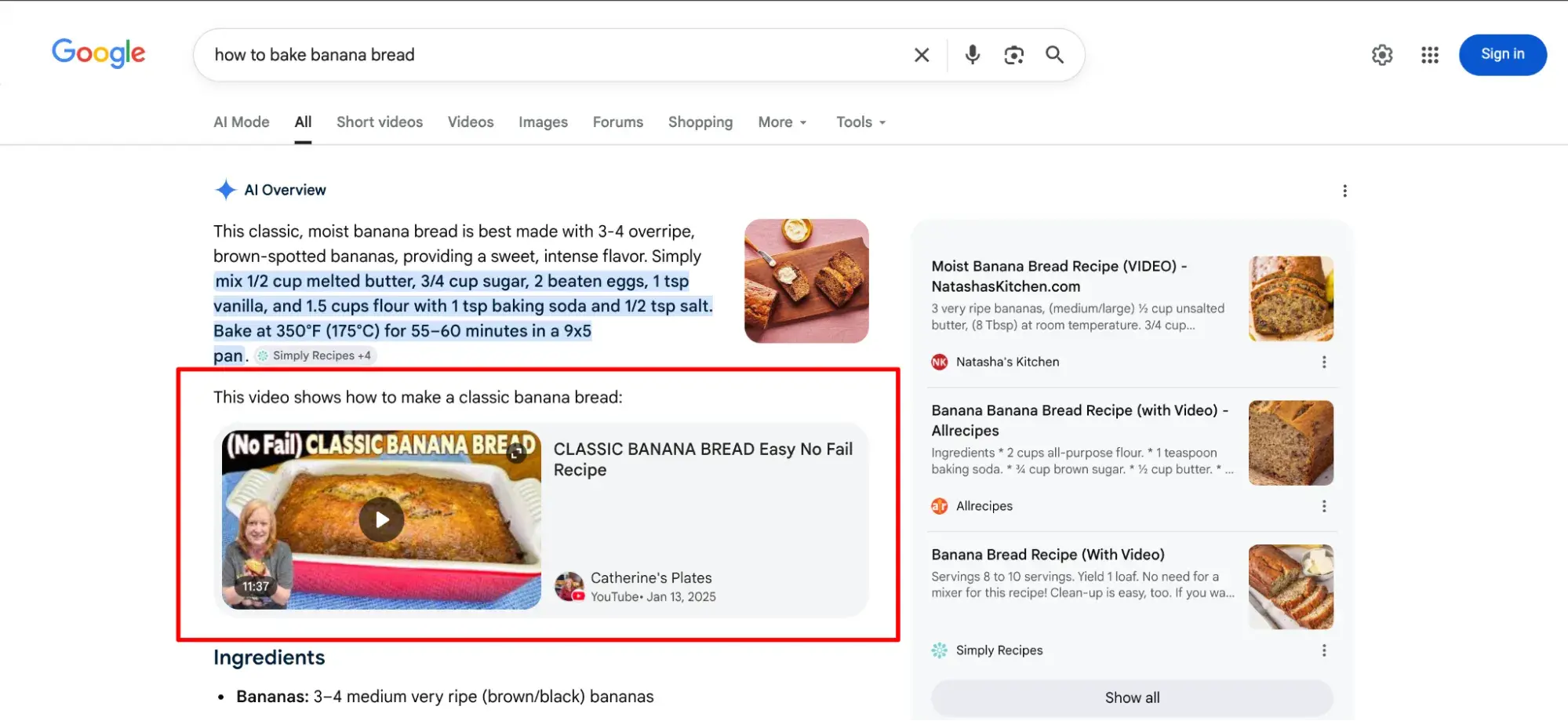
In my own experience, AIOs almost always cite a YouTube video for “how to” queries, whether that’s “how to bake banana bread:”
Or “how to use a crm for sales.”
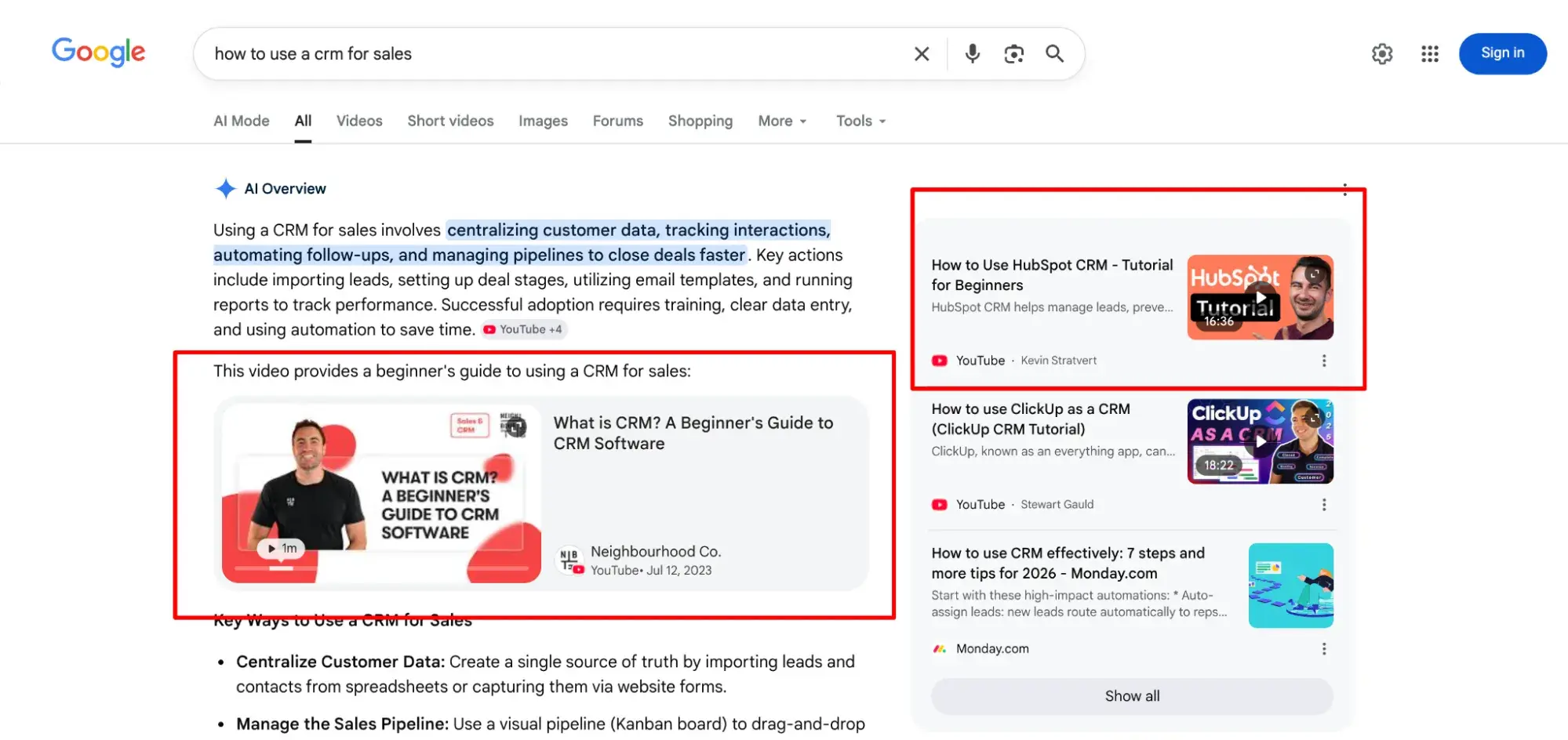
Therefore, I recommend that if you want more AIO citations, create YouTube content targeting “how to” queries, or even partner with YouTube influencers to create content on behalf of your brand.
Reddit is the second-best place to optimize for AIOs. In Fan Out’s analysis of over 33,000 AI citations across Perplexity, Google AI Overviews, and ChatGPT Plus, Reddit surfaced as the #1-cited off-site platform overall. However, Reddit was by far most favored by AIO, which made up a 51% share of the Reddit citations (substantial, but still less than YouTube).
Fan Out data reveals this about Reddit:
- Posts are far more likely to be cited by AI engines than comments.
- The top three content types are best-of, alternative-seeking, and review-opinion.
- Engagement on a Reddit post doesn’t matter nearly as much as content structure and topical relevance.
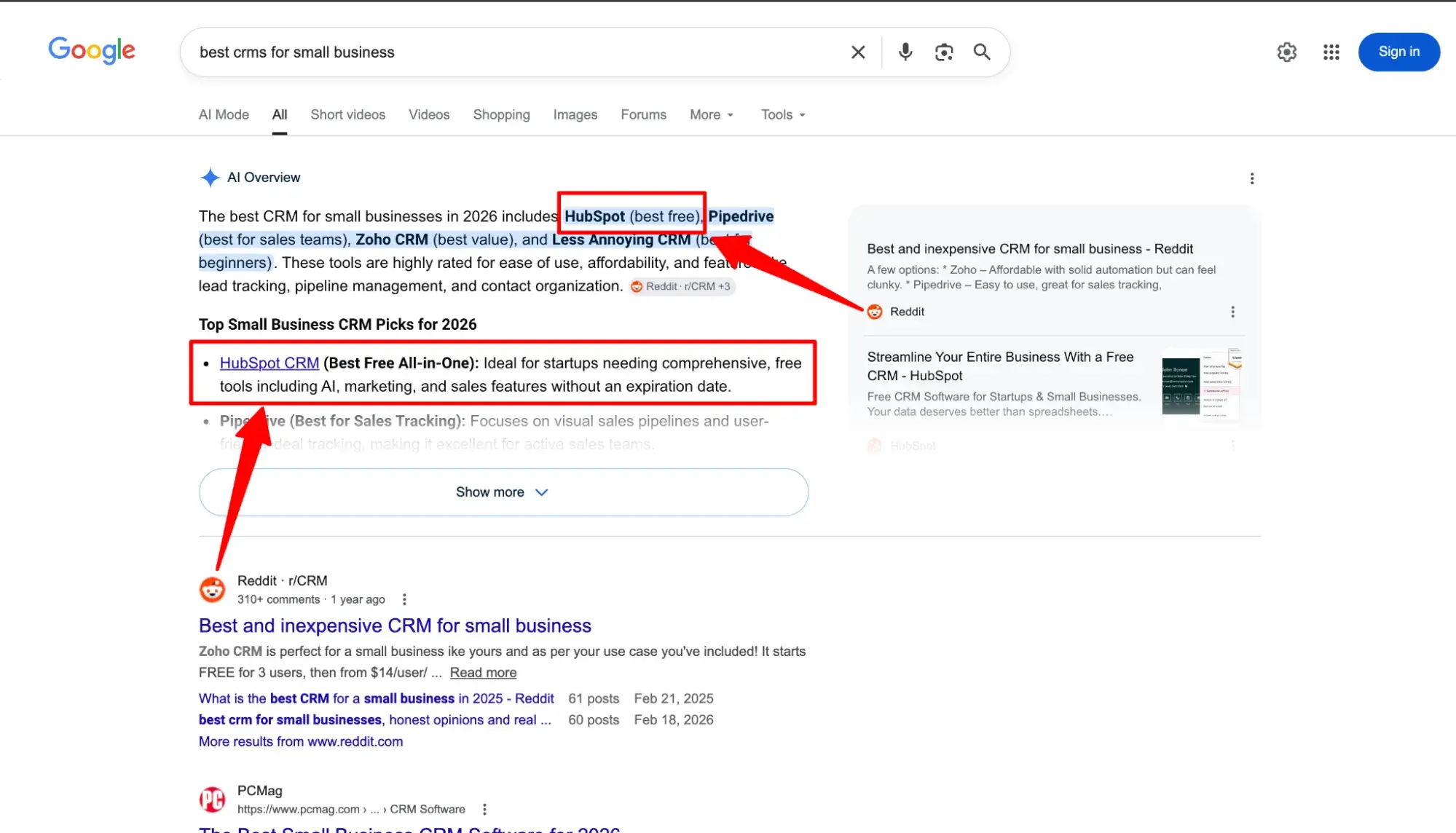
Here’s the power of Reddit on AIOs in real life: I Googled “best crms for small business” and HubSpot was recommended first, thanks to a Reddit post that HubSpot didn’t even create or comment on.
Measuring and Diagnosing AI Overview Impact
Queries that led to AI Overviews are included in the overall performance report in Google Search Console, but they’re aggregated with the rest of your SEO keywords, so you cannot filter to see only the metrics related to AIOs. To do that, you’ll have to use a third-party tool. Here are two that I recommend.
Ahrefs Brand Radar
Best for: answering the question, “What queries are triggering AI Overviews for this specific page or domain?”
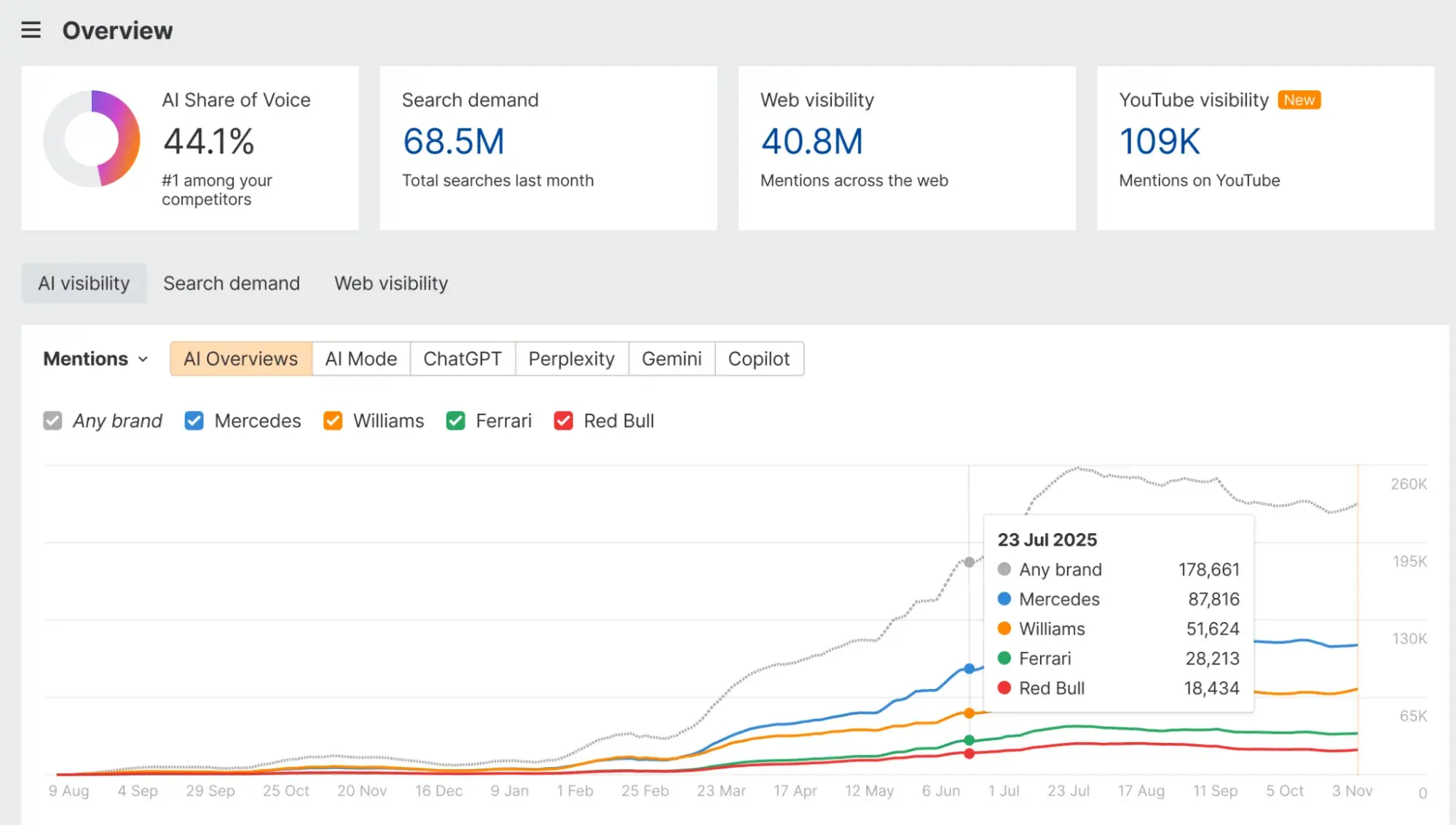
Enter any URL and Ahrefs Brand Radar shows you the queries where it was cited in an AI Overview, including an estimated average monthly search volume for the query, the content of the AI Overview, and a list of the cited domains included in that AIO.
If you’re already using Ahrefs for SEO research and tracking, then it makes sense to use its Brand Radar too for the AEO piece.
Pricing: Brand Radar is included in paid Ahrefs subscriptions, which start at $129/mo, but there are limitations on the number of prompts you can track. Alternatively, Brand Radar is available as a standalone tool starting at $199/mo for one AI platform (such as AI Overviews/AI Mode) but doesn’t include custom prompt tracking. To get custom prompt tracking, you can purchase an add-on package.
Otterly
Best for: answering the question, “Is this domain getting cited in AI Overviews for the tracked prompts I care about?”
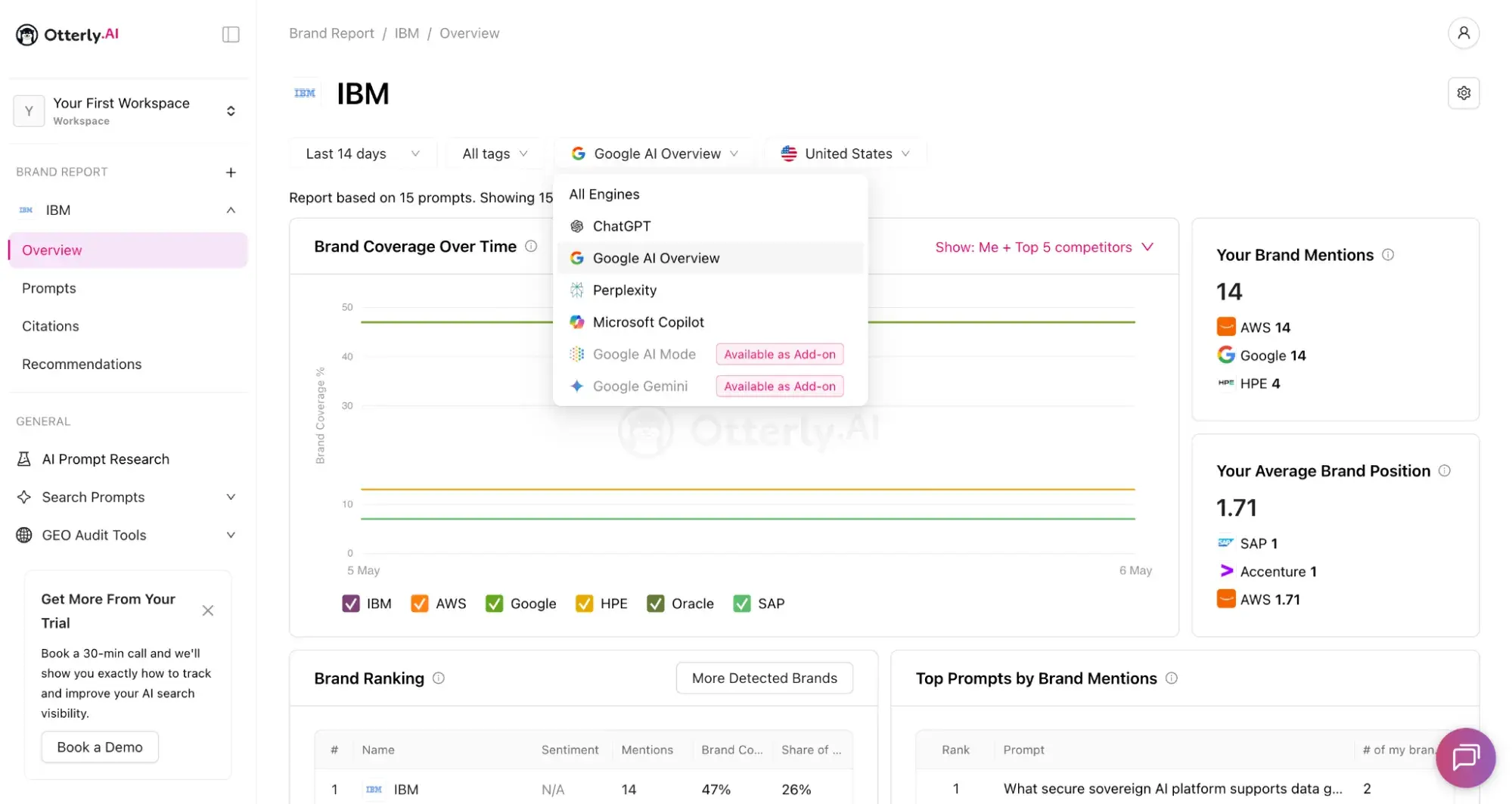
Otterly tracks prompts across six answer engines, including Google AI Overviews, surfacing both citation data and brand sentiment. I’ve tested Otterly quite a few times for other articles, including one on the best AEO rank trackers, and I really appreciate its ease of use and the fact that it’s a dedicated AEO tool (as opposed to doing both AEO and SEO). For brands focused on AI visibility, Otterly will be more straightforward and affordable than Ahrefs Brand Radar.
Pricing: Otterly pricing starts at $29/mo for 15 tracked prompts across ChatGPT, Google AI Overviews, Perplexity, and Microsoft Copilot.
Frequently Asked Questions About AI Overviews and SEO
Can you fully opt out of appearing in AI Overviews?
No, you cannot opt out of having your website appear in AI Overviews specifically, but there is a workaround: Inserting the “nosnippet” robots meta tag prevents pages from being included in snippets not only for AI Overviews/AI Mode but also for Google’s traditional search (e.g., it wouldn’t show up for a featured snippet).
- Page-specific. Paste this code between <head> and </head> of the HTML on every individual page that you don’t want appearing in AI Overviews.
Code: <meta name=”googlebot” content=”nosnippet”>
- Sitewide: If your site uses a template, you can paste this code in the template header if you don’t want any of the pages that use that template to appear in AI Overviews:
Code: <meta name=”googlebot” content=”nosnippet”>
Pro tip: Do not mix up “nosnippet” with “noindex.” Adding the “noindex” robots meta tag would prevent the affected pages from showing up in all of Google Search (not just AI Overviews), so it is extreme, ill-advised, and would hurt the affected pages’ SEO.
Now, on the flip side, as a searcher, you can’t really opt out of seeing AI Overviews when you perform a search in Google. Here’s what Google says in its help center: “AI Overviews are a core Google Search feature, like knowledge panels. Features cannot be turned off.” However, there are a couple of workarounds:
- Add “-ai” at the end of your query. This usually prevents AI Overviews from appearing in your Google search results, but it’s not guaranteed.
- Click the “Web” tab filter at the top of the Google results page. This will show you only the web results, minus the AI Overviews.
How do you track clicks from AI Overviews specifically?
Right now, it isn’t possible to reliably isolate clicks from AI Overviews in Google Search Console. The best you can do at the moment is track AIO visibility, and to do that, you’ll need a third-party tool. Ahrefs Brand Radar supports AI Overview coverage and can help you find queries where AI Overviews mention your brand, cite your website, or both. From there, you can compare those visibility signals with GSC and analytics data to estimate the impact AIOs are having on your organic traffic.
Should you create pages specifically for AI Overviews?
No. Google says there are no additional requirements or special optimizations needed to appear in AI Overviews, and both Google and Bing representatives have cautioned against creating separate Markdown, JSON, or bot-facing versions of pages just for LLMs. Instead, focus on improving your existing content using the practices covered above: clear definition-style answers, FAQ sections, EEAT signals, and a visible “Last updated” date. That means optimizing for both traditional SEO and AI search visibility simultaneously, without creating separate “AI-only” pages.
How do you brief executives on AI Overview impact?
When briefing executives on the impact of AI Overviews on your website and business, reframe the challenge as an opportunity to win mindshare and shift the success metrics from clicks to visibility.
“Our site is losing traffic” is a bad look for any marketing org. But ultimately, leadership cares about the bottom line: Is this earning the business money or not? Clicks used to be a proxy for that, but they’re not anymore. It doesn’t matter if your site is losing clicks if the business is actually gaining customers.
Studies show that LLM traffic converts at a higher rate than traditional Google-referred traffic. Ahrefs found that its AI search traffic converts 23x better than traffic from traditional organic search. Semrush concluded that LLM visitors converted 4.4x better than traditional organic search visitors, after analyzing over 500 digital marketing and SEO topics.
Suggest a shift from traffic to share of voice; that’s the metric that shows how your brand stacks up against competitors in AI visibility. Because sure, your site might be losing traffic, but there’s a good chance that across the board in your category, competitors are losing traffic too. What matters, then, is that when a potential customer asks about your category, whether they consult Google AI Overviews, ChatGPT, or Perplexity — your brand is the one they see. Communicate to leadership that by winning more AI Overviews (even if your brand isn’t linked or your site isn’t clicked), you’re actually winning mindshare.
Beyond AI Overviews: Tracking Your Visibility Across All Answer Engines
By now, I hope you see that AI Overviews, like the featured snippets that preceded them, represent a push-and-pull that has always existed between content creators and Google: The search engine constantly changes its algorithm and SERP design, and what else can we do besides adapt? AI Overviews could be an exciting opportunity to be the recommended answer to a potential customer’s question — even if they never click on your website.
I do want to caution against taking a myopic view of AEO and focusing only on AI Overviews, however. They are just one surface in the AI search landscape. You can’t forget about the opportunities for your brand to show up in answers from other LLMs, such as ChatGPT and Perplexity.
HubSpot AEO is a specialized tool that tracks citations in ChatGPT, Perplexity, and Gemini and provides recommendations to increase your visibility in each. Pricing starts at $50/month with no other HubSpot subscription required.
For teams running marketing in HubSpot already, AEO is included in Marketing Hub Pro and Enterprise. The integrated version uses your CRM data to suggest which prompts to track from day one, so tracking is grounded in your actual business context rather than generic category guesses. And because the recommendations connect to HubSpot’s content tools, you can take action on AEO insights within the same tool.
The takeaway: AI Overviews matter, but they’re only one slice of the bigger AEO opportunity. Once you broaden the lens to every major answer engine, you can stop guessing where your visibility is leaking and start closing those gaps systematically.